
Whoa! I got tired of juggling multiple extensions. Seriously? Yes. At first I thought any Ethereum extension would do—Metamask, one click, done—but my instinct said somethin’ was off. Gas estimates that lied, approvals I forgot, and that creeping sense that one wrong click could mean goodbye to funds.
Okay, so check this out—there’s a quieter, smarter option in the browser extension space that fixed most of my workflow annoyances: rabby wallet. I’m biased, but after a few weeks of real use (swaps, bridging, interacting with DeFi contracts), it began to feel like the wallet was actually helping me think about risk instead of adding noise.
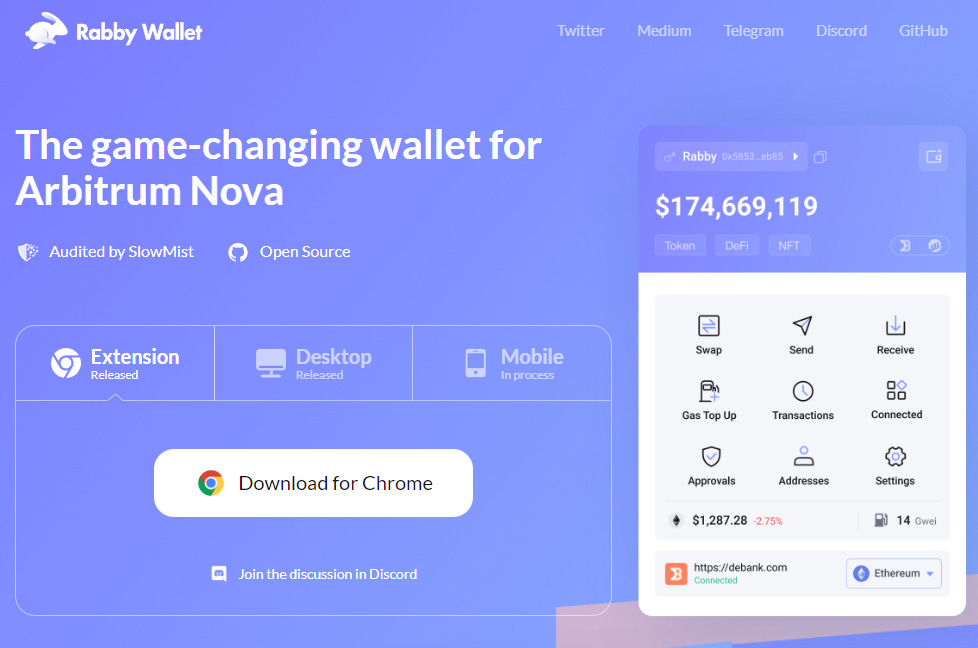
What changes when a wallet thinks like a user
Here’s the thing. Wallets aren’t just key stashes. They shape behavior. On one hand, an extension that shows every token change and approval in plain language reduces mistakes. On the other, too many popups become background noise and you stop reading them—though actually, wait—let me rephrase that: design that reduces cognitive load is the real win.
Rabby wallet focused on three practical problems I ran into daily:
First, approvals: it groups and explains contract permissions so you can revoke unlimited approvals before they become permanent liabilities. Second, gas heuristics: it gives clearer estimates and lets you pin preferred speeds which helps when a trade must land fast. Third, multi-chain ergonomics: switching networks doesn’t feel like toggling a trapdoor into some unfamiliar state.
My first impression was: simple and safe. Then I dug deeper. On one hand, the interface is friendly. On the other hand, the security model is typical of browser extensions, so you still need good habits.
Practical features that matter for DeFi users
Rabby wallet isn’t magic. But it bundles several small things that, together, feel like a better flow when you use DeFi often.
Approval management—oh man, this one matters. You can see token allowances at a glance and revoke them without going through multiple dApps or calling Etherscan. That reduced my attack surface—and I found a few old approvals I forgot about. Which is wild, because I thought I was on top of it.
Transaction visualization is another big one. The wallet surfaces calldata and differentiates between simple transfers and contract interactions. So when a site asks to “claim” something, you can actually see whether it’s a harmless transfer or a contract call that might mint tokens and set permissions. That transparency saved me from a phishing-like UI once.
Also—gas control. If you’re doing a sandwich-resistant strategy or just want a reliable confirmation time, the ability to set custom gas fees and see historical timings helps a lot. It’s not perfect, but better than guessing.
And then there’s chain support. I move between Ethereum mainnet, some L2s, and a couple of EVM-compatible chains. The wallet handles multiple networks without breaking my mental model, and it keeps accounts consistent so I don’t accidentally broadcast a transaction on the wrong chain. Small relief, huge payoff.
Security: what to watch for, what to do
I’ll be honest: a browser extension is still a high-risk surface. My gut says treat it like a phone’s wallet—not invulnerable. Keep the private key offline when you can. Use hardware wallets with the extension for high-value accounts. Rabby wallet supports hardware integrations, which is a must for me when moving large sums.
Phishing remains the top threat. Double-check domains. Use bookmark-based dApp access if you’re nervous. Also, set reasonable token allowances—not “infinite” unless you absolutely need them—and revoke when done. This is very very important.
One practice I adopted: maintain two accounts. A hot account for low-dollar testing and a cold/seeded account with hardware for big moves. It’s not sexy, but it reduces regret.
Quick FAQ
Is rabby wallet safe to use with DeFi?
It improves safety relative to a vanilla wallet by giving clearer approvals, transaction detail, and hardware wallet support—but it’s not a silver bullet. Use good operational security: updated browser, vetted extension source, hardware wallet for large deposits, and cautious allowance management.
How do I get started with rabby wallet?
Install the extension from the official source, create or import a seed (write it down, offline), and test with small amounts. If you want the download page, here’s the place to get it: rabby wallet.
Something felt off when I first tried other wallets: too many defaults that favored convenience over safety. Rabby nudged me the other direction—clearer defaults, slightly more friction, but less chance of catastrophe. That friction is welcome when you’re dealing with irreversible transactions.
There’s still room for improvement. I wish gas predictions were even smarter across congested L2s. I also want deeper integration with on-chain analytics in the UI—so you can see token age or rug-suspect flags before approving. But those are product roadmap-ish wishes, not dealbreakers.
Final mood? Cautious optimism. If you’re a DeFi user who cares about ergonomics and risk reduction, give this wallet a test drive. Try a tiny swap, revoke an approval, and see how it feels. You’ll probably notice the difference—maybe not at first, but over weeks of use.
I’m not 100% certain this is the single best wallet for everyone. Different workflows demand different trade-offs. Still, for day-to-day DeFi with a sane security posture, it earned a spot in my routine. Try it, hack around, and if you like it or find rough edges, that feedback loop is what makes these wallets better.